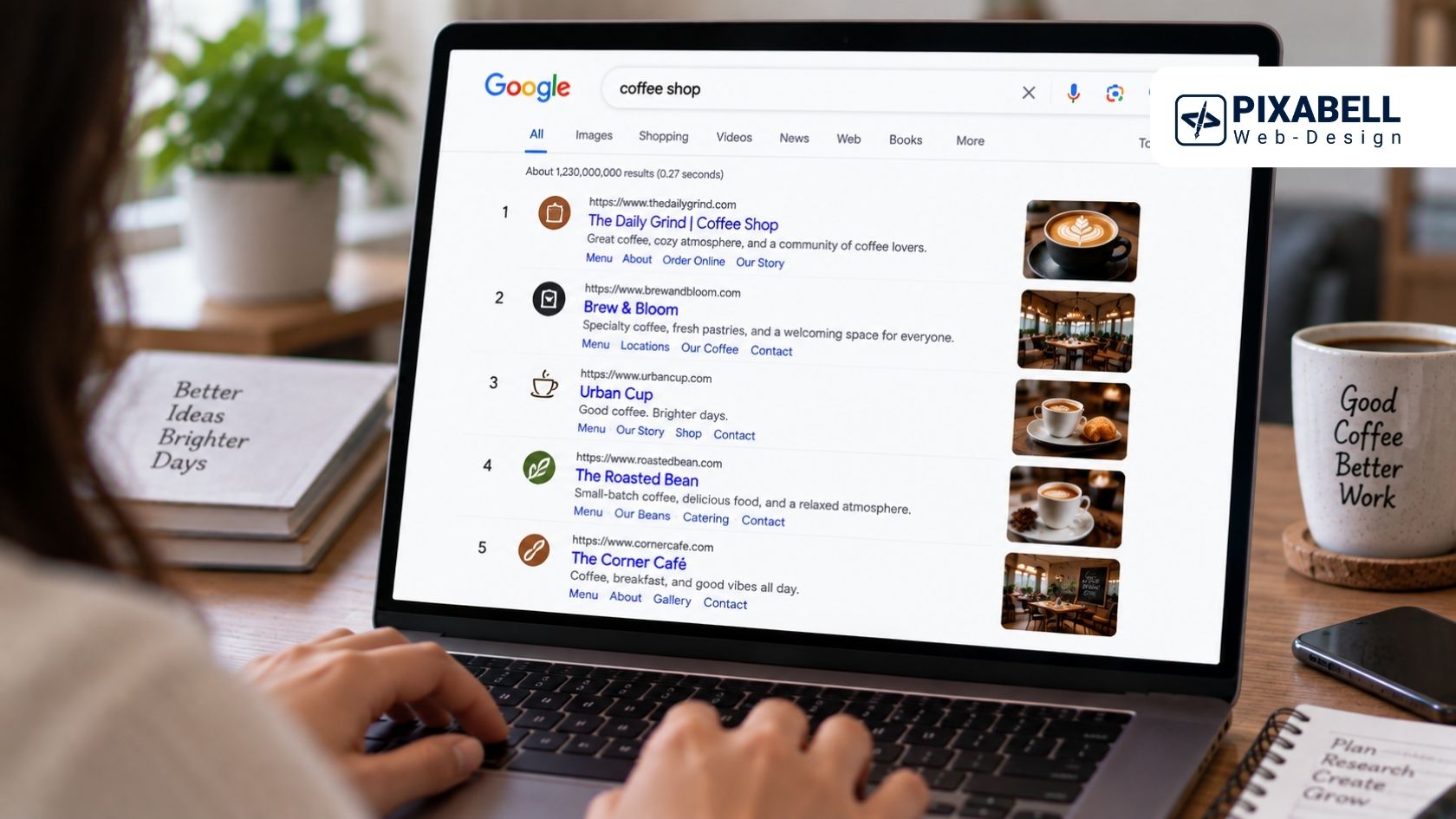
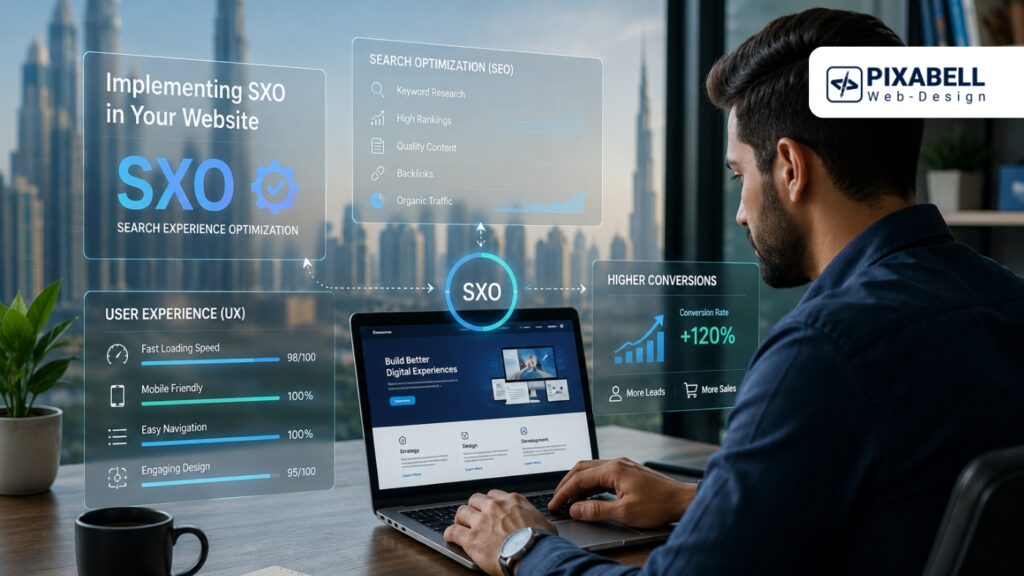
Search engine optimization has evolved significantly over the past few years. Ranking on Google is no longer enough to generate business growth. Many websites successfully attract visitors but struggle to convert them into leads, inquiries, or customers. This gap between traffic and conversions is where Search Experience Optimization (SXO) becomes essential.
SXO combines SEO, user experience (UX), conversion rate optimization (CRO), and customer journey optimization into a unified strategy. Instead of focusing solely on search engine rankings, SXO ensures visitors have a seamless experience from the moment they click on your website until they complete a desired action.
For businesses in Dubai, where digital competition continues to intensify across industries, implementing SXO can provide a major competitive advantage. Companies looking for the best SEO services in Dubai are increasingly prioritizing agencies that understand both search visibility and user behavior.
At Pixabell, we believe successful SEO is not just about driving traffic. It is about creating experiences that convert visitors into loyal customers. This guide explains exactly how to implement SXO on your website and maximize the value of your organic traffic.
Key Highlights
- SXO combines SEO, UX, and conversion optimization.
- Search intent is the foundation of every successful SXO strategy.
- Website speed and user experience directly impact rankings and conversions.
- Content should satisfy both search engines and human visitors.
- Continuous testing and optimization are critical for long-term success.
- SXO helps businesses generate more leads from existing website traffic.
Table of Contents
ToggleWhat Is SXO and Why Has It Become Essential?
Search Experience Optimization focuses on improving every interaction a user has with your website after finding it through search engines.
Traditional SEO aims to increase visibility. SXO goes further by ensuring visitors can easily navigate your website, find relevant information, build trust in your brand, and take action.
Google’s algorithms have become increasingly sophisticated in evaluating user satisfaction. Factors such as page speed, mobile usability, content quality, engagement signals, and user experience all contribute to search performance.
This shift means businesses can no longer rely solely on keyword optimization. Websites must provide meaningful experiences that satisfy user intent and encourage engagement.
For marketers, startups, and business owners, SXO creates a more sustainable path to growth because it focuses on attracting qualified visitors and converting them efficiently.
Step 1: Understand Search Intent Before Creating Content
The foundation of SXO starts with understanding why users are searching.
Many businesses focus on keywords without considering the motivations behind those searches. However, Google’s primary goal is to satisfy user intent, not simply match keywords.
Every search falls into one of several categories:
- Informational intent
- Commercial intent
- Transactional intent
- Navigational intent
For example, a user searching for “best seo company in dubai uae” is likely evaluating agencies and comparing options before making a decision. They may want to review case studies, understand services, compare pricing, and assess credibility.
To implement SXO effectively:
- Analyze search intent for every target keyword.
- Study top-ranking pages.
- Identify user questions and concerns.
- Create content that directly addresses those needs.
- Map content to different stages of the customer journey.
When your content aligns with search intent, users stay longer, engage more, and are more likely to convert.
Step 2: Perform a Comprehensive SEO Audit
Before making improvements, you need a clear understanding of your website’s current performance.
A comprehensive audit helps identify technical, content, and user experience issues that may be limiting growth.
Review areas such as:
- Crawlability and indexing
- Site architecture
- Internal linking
- Mobile usability
- Page speed
- Duplicate content
- Metadata optimization
- Broken links
- Conversion pathways
Many websites have hidden technical issues that negatively affect both rankings and user experience.
By conducting a thorough audit, businesses can prioritize improvements that deliver the greatest impact.
Step 3: Improve Website Speed and Core Web Vitals
Website speed is one of the most important components of SXO.
Research consistently shows that users expect websites to load quickly. Even a few seconds of delay can increase bounce rates and reduce conversions significantly.
Google also uses Core Web Vitals as ranking signals, making speed optimization critical for both SEO and user experience.
Areas to optimize include:
- Image compression
- Browser caching
- CDN implementation
- Server response times
- JavaScript optimization
- CSS optimization
- Lazy loading
A fast website creates a positive first impression and encourages users to explore additional pages.
Step 4: Optimize Mobile User Experience
Mobile traffic now dominates most industries.
A website that performs well on desktop but poorly on mobile creates friction that can severely impact conversions.
Mobile SXO implementation should focus on:
- Responsive design
- Touch-friendly navigation
- Fast loading speeds
- Readable content layouts
- Optimized forms
- Simplified user journeys
Users should be able to access information, navigate pages, and complete actions effortlessly from any device.
Businesses investing in SEO services often overlook mobile optimization, even though it plays a major role in user satisfaction and rankings.
Step 5: Create Content That Solves User Problems
Content remains one of the most powerful elements of SXO.
However, successful SXO content differs from traditional SEO content.
Instead of focusing solely on keywords, SXO content prioritizes:
- User questions
- Pain points
- Decision-making factors
- Practical solutions
- Clear explanations
Each piece of content should help users move closer to their goals.
For example, someone researching the best SEO services may want information about:
- SEO strategies
- Pricing considerations
- Expected timelines
- Service comparisons
- Success metrics
The more effectively your content addresses these concerns, the greater the likelihood of conversion.
Step 6: Improve Website Navigation and User Journey
Visitors should never feel lost on your website.
Poor navigation is one of the most common reasons users leave without taking action.
SXO focuses on creating logical user journeys that guide visitors toward their objectives.
Best practices include:
- Clear navigation menus
- Logical page hierarchy
- Breadcrumb navigation
- Strategic internal linking
- Easy-to-find contact information
- Clear service categorization
A well-structured website improves usability while helping search engines understand content relationships.
Step 7: Optimize Landing Pages for Conversions
Traffic without conversions provides limited business value.
Every important landing page should be optimized to encourage action.
This includes:
- Strong value propositions
- Clear headlines
- Relevant content
- Trust-building elements
- Prominent calls-to-action
- Mobile-friendly layouts
Visitors should immediately understand:
- What you offer
- Why it matters
- Why they should trust you
- What action to take next
Businesses searching for the best SEO company in Dubai UAE often compare multiple providers. Conversion-focused landing pages can significantly improve lead generation.
Step 8: Implement Trust Signals Across Your Website
Trust plays a critical role in user decision-making.
Even if visitors find your website through search engines, they need confidence before taking action.
Effective trust signals include:
- Client testimonials
- Case studies
- Industry certifications
- Awards and recognition
- Security badges
- Verified reviews
- Portfolio examples
Trust signals reduce uncertainty and help visitors feel comfortable engaging with your business.
Step 9: Use Behavioral Analytics to Understand Users
One of the most overlooked aspects of SXO is understanding how users actually interact with your website.
Analytics tools can reveal valuable insights about:
- Visitor behavior
- Drop-off points
- Navigation patterns
- Conversion bottlenecks
- User engagement
Tools such as Google Analytics, Google Search Console, Microsoft Clarity, and Hotjar provide data that can guide optimization decisions.
SXO is not based on assumptions. It relies on real user behavior.
Step 10: Continuously Test and Improve User Experience
SXO is not a one-time project.
User expectations, search algorithms, and market conditions continue evolving.
Businesses should regularly:
- Review analytics data
- Monitor conversion rates
- Test CTAs
- Optimize landing pages
- Update content
- Improve page speed
- Analyze user feedback
Continuous improvement ensures long-term success and helps maintain a competitive advantage.
Common SXO Mistakes Businesses Should Avoid
Many organizations make avoidable mistakes when implementing SXO.
Common issues include:
- Focusing only on rankings
- Ignoring user intent
- Creating keyword-stuffed content
- Slow website performance
- Poor mobile experiences
- Weak calls-to-action
- Confusing navigation
- Neglecting conversion optimization
- Failing to analyze user behavior
Avoiding these mistakes can significantly improve both rankings and conversions.
Essential Tools for SXO Implementation
Successful SXO requires the right technology stack.
Recommended tools include:
- Google Analytics 4
- Google Search Console
- PageSpeed Insights
- Microsoft Clarity
- Hotjar
- Ahrefs
- SEMrush
- Screaming Frog
- GTmetrix
These tools help businesses identify opportunities and measure performance improvements.
Why Choose Pixabell for SXO and SEO Services in Dubai?
Implementing SXO requires expertise in SEO, UX, content strategy, analytics, and conversion optimization.
At Pixabell, we help businesses create websites that rank well, engage users, and generate measurable results.
Our approach combines:
- Technical SEO
- User experience optimization
- Content strategy
- Conversion rate optimization
- Behavioral analytics
- AI-driven search optimization
Whether you’re searching for the best SEO services in Dubai or looking for a strategic partner to improve website performance, our team provides tailored solutions designed for sustainable growth.
Future of SXO, AI Search, and User Experience
Search engines are rapidly evolving through artificial intelligence and machine learning.
Emerging trends include:
- AI-powered search experiences
- Search Generative Experience (SGE)
- Voice search optimization
- Personalized search results
- Predictive user experiences
- Advanced behavioral analytics
- Conversion-focused SEO strategies
Businesses that invest in SXO today will be better positioned to adapt to future search environments.
Ready to Implement SXO and Grow Your Business?
Driving traffic is only half the battle. The real opportunity lies in converting that traffic into leads, sales, and long-term customers.
At Pixabell, we help businesses implement advanced SXO strategies that combine SEO, user experience, and conversion optimization into a single growth-focused approach. If you’re looking for the best SEO services in Dubai or want to work with the best SEO company in Dubai UAE, our team is ready to help. Contact Pixabell today and discover how SXO can transform your website into a powerful growth engine for your business.
Faqs
What is SXO in SEO?
SXO stands for Search Experience Optimization. It combines SEO, user experience, and conversion optimization to improve both rankings and customer engagement.
Why is SXO important?
SXO helps businesses convert more visitors into leads and customers while improving search engine performance.
How long does SXO take to show results?
Most businesses begin seeing measurable improvements within three to six months, depending on website size and existing optimization levels.
Does SXO replace SEO?
No. SXO builds upon SEO by adding user experience and conversion optimization components.
Can SXO improve lead generation?
Yes. SXO focuses on reducing friction, improving user journeys, and increasing conversion opportunities throughout the website.